
Quality & Certification Guides / Decision Guide
Salt Spray and Durability Test Report Guide
Test hours and cycle counts need context. A useful report explains what was tested, how it was judged and whether the sample matches the quoted model.
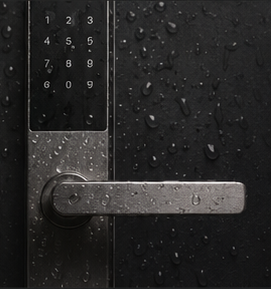
Exact model, component and finish tested
Test standard, method, duration or cycle count
Sample condition, preparation and laboratory identity
Inspection intervals, acceptance criteria and final result
Decision Context
What This Guide Helps You Confirm
Salt-spray testing can compare corrosion behavior under a defined accelerated method, but it does not directly predict service years in every climate. Review the substrate, finish, component and acceptance criteria.
Durability may refer to handle cycles, latch operation, keypad use, fingerprint enrollment or other tests. Ask for the tested function and failure definition instead of relying on one cycle number.
The image slot is reserved for product structure, door condition, material, installation, OEM or quality evidence related to this guide.
Evidence Workbench
Connect the Written Checklist to the Real Product or Door
Use the selected model, representative door and available documents together. Avoid treating a generic image, one feature name or one test value as a complete purchasing decision.
- Keep the candidate model and configuration visible.
- Use labeled photos or drawings instead of loose descriptions.
- Record uncertain items for confirmation before quotation.
- Retain the approved evidence for sample and production review.
Decision Table
Test Report Interpretation
Use the table to compare options on the same physical, operational and evidence basis.
| Test type | What it can show | What it cannot prove alone | Buyer check |
|---|---|---|---|
| Salt spray | Comparative corrosion behavior under a defined method. | Exact outdoor service life. | Material, finish, hours, rating and tested component. |
| Handle cycle | Repeated mechanical operation under test conditions. | Performance on a misaligned door. | Load, cycle definition and failure criteria. |
| Latch/mortise cycle | Repeated lock-body movement. | Compatibility with every door and keeper. | Mortise model, setup and lubrication condition. |
| Environmental test | Response to defined temperature or humidity exposure. | All combined real-world weather effects. | Range, duration and operating state. |
Buyer Process
Request and Use Durability Evidence
Move from site or project evidence to a documented model and supply decision.
Define coastal corrosion, high traffic, gate movement or another actual concern.
Fix material, finish, model and relevant component.
Ask for the method, duration, result and model relationship.
Identify installation and maintenance factors outside the test.
Use samples, incoming checks and maintenance guidance alongside reports.
Evidence Boundaries
What This Guide Should Not Be Used to Assume
These cautions keep material, technology, installation and report language tied to the selected model and real site.
Accelerated tests use defined conditions and cannot be converted directly without a validated model.
Check what was actually placed in the test chamber or cycle rig.
Mechanical test results cannot compensate for sag, poor keeper alignment or unstable gates.
Related Routes
Continue the Decision With the Next Useful Page
Use related guides, product pages and support routes to close the remaining questions.
Buyer FAQ
Questions Buyers Ask Before Confirmation
Answers stay cautious where model, market, door or final configuration can change the result.
How many salt-spray hours are good for a smart lock?
There is no universal number. Compare the test method, component, finish, result criteria and actual environment.
Can a life-cycle test prove the lock will last a specific number of years?
No. It shows performance under defined cycles, not every pattern of use, installation and maintenance.
Should I request test photos?
Before-and-after photos can help interpret visible results when they are tied to the report and sample identity.
Ready to Confirm?
Ask what was tested, not only how long.
Send the selected model, finish and application risk. SivoLock can identify relevant available reports and their evidence boundaries.
Buyer action block
Convert Salt Spray and Durability Test Report Guide into a usable inquiry note.
Use this article to prepare a concrete next step: copy the relevant facts into an RFQ, attach evidence and ask for selected-model confirmation.
Include application, door data, model preference, quantity, market and the exact document or evidence requested.
Door photos, measurements, drawings, sample records and artwork files reduce back-and-forth.
If the article mentions a report, certification, IP rating or test, request availability for the exact SKU.
| Decision area | Confirm before quotation | Claim boundary |
|---|---|---|
| Inquiry line | We are reviewing Salt Spray and Durability Test Report Guide; please confirm the suitable SivoLock model route. | Turns the article topic into a sales-ready question. |
| Required inputs | Door/application details, target market, quantity, sample timing and preferred functions. | Makes the response practical rather than generic. |
| Evidence request | Datasheet, installation guide, report availability, sample photos or approval files as relevant. | Ties documents to the selected model. |
| Next page | Continue to product, material, support or contact pages after the open questions are listed. | Improves internal navigation without forcing a false answer. |
Can this page replace a final datasheet?
No. Use it to prepare the buying conversation, then confirm selected-model values, reports and packaging details from the latest SivoLock response.
What happens when a value is not available yet?
Leave it open and mark it as configuration-dependent. Do not turn missing certification, IP, factory or test evidence into a public claim.
Send the confirmed inputs and keep any missing proof as an open request. SivoLock can respond with model-specific options, document availability and quotation questions.