SUS304 Stainless Steel Smart Locks
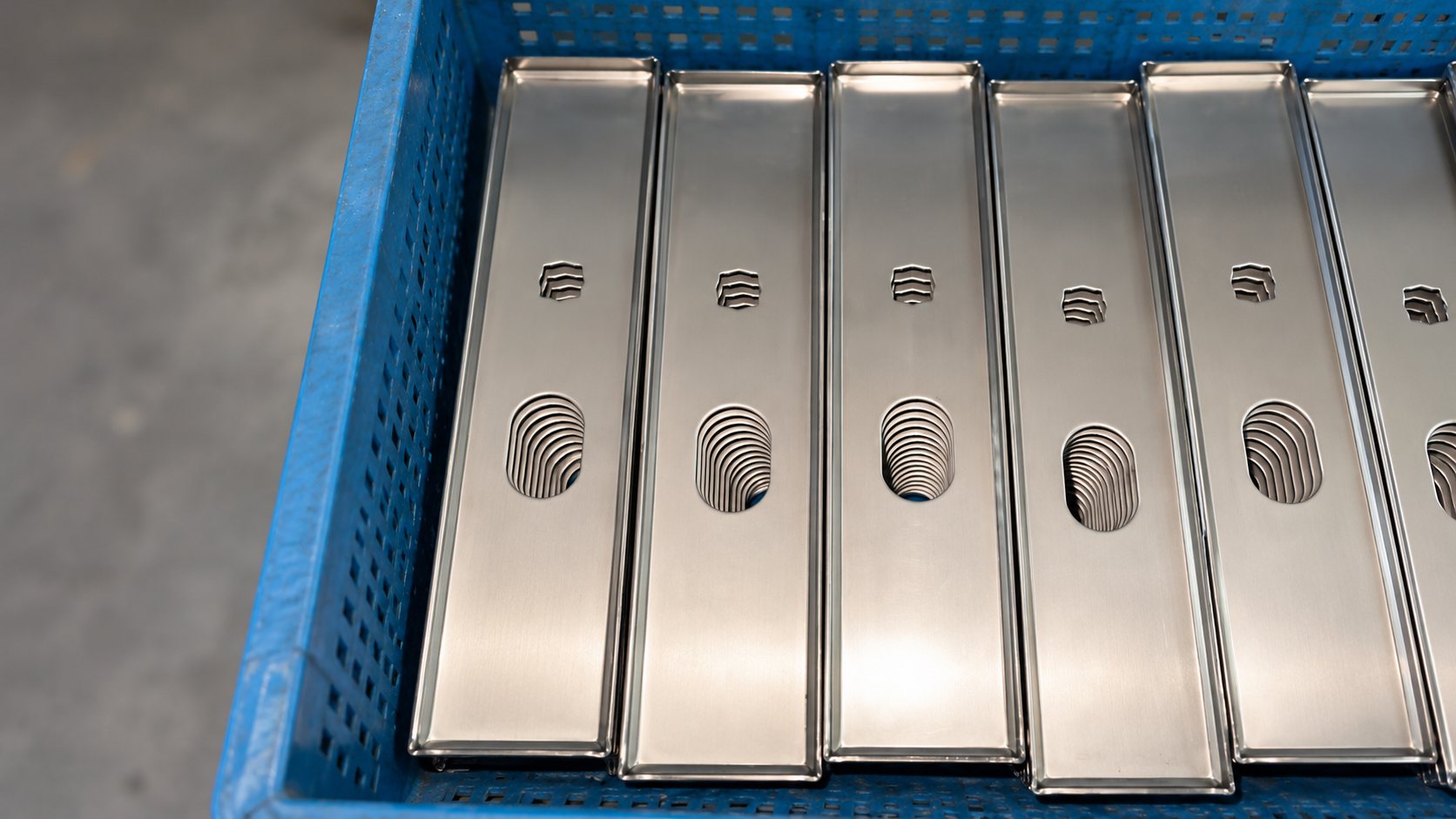
A SUS304 stainless steel smart lock has its housing and visible structural parts made from SUS304, a chromium-nickel stainless steel that resists corrosion well in normal conditions and can be formed, welded and polished. Most of our models use SUS304 housing components; electronics, internal mechanisms and fasteners use materials suited to their job.
What SUS304 Is
SUS304 is the Japanese (JIS) name for the most widely used austenitic stainless steel, known elsewhere as 304 or 1.4301. Its JIS limits are 18–20% chromium and 8–10.5% nickel, with no more than 0.08% carbon. The chromium forms a thin, invisible oxide film on the surface; if the film is scratched, it re-forms in air, so the corrosion protection is in the steel itself rather than in a coating. The scratch itself stays visible; only the protection returns.
That film works well indoors and in ordinary outdoor conditions. Salt deposits, chlorides from cleaning products and dirt that holds moisture against the surface can break it down locally, so stainless steel can still stain. Coastal sites need their own assessment; see corrosion resistance.
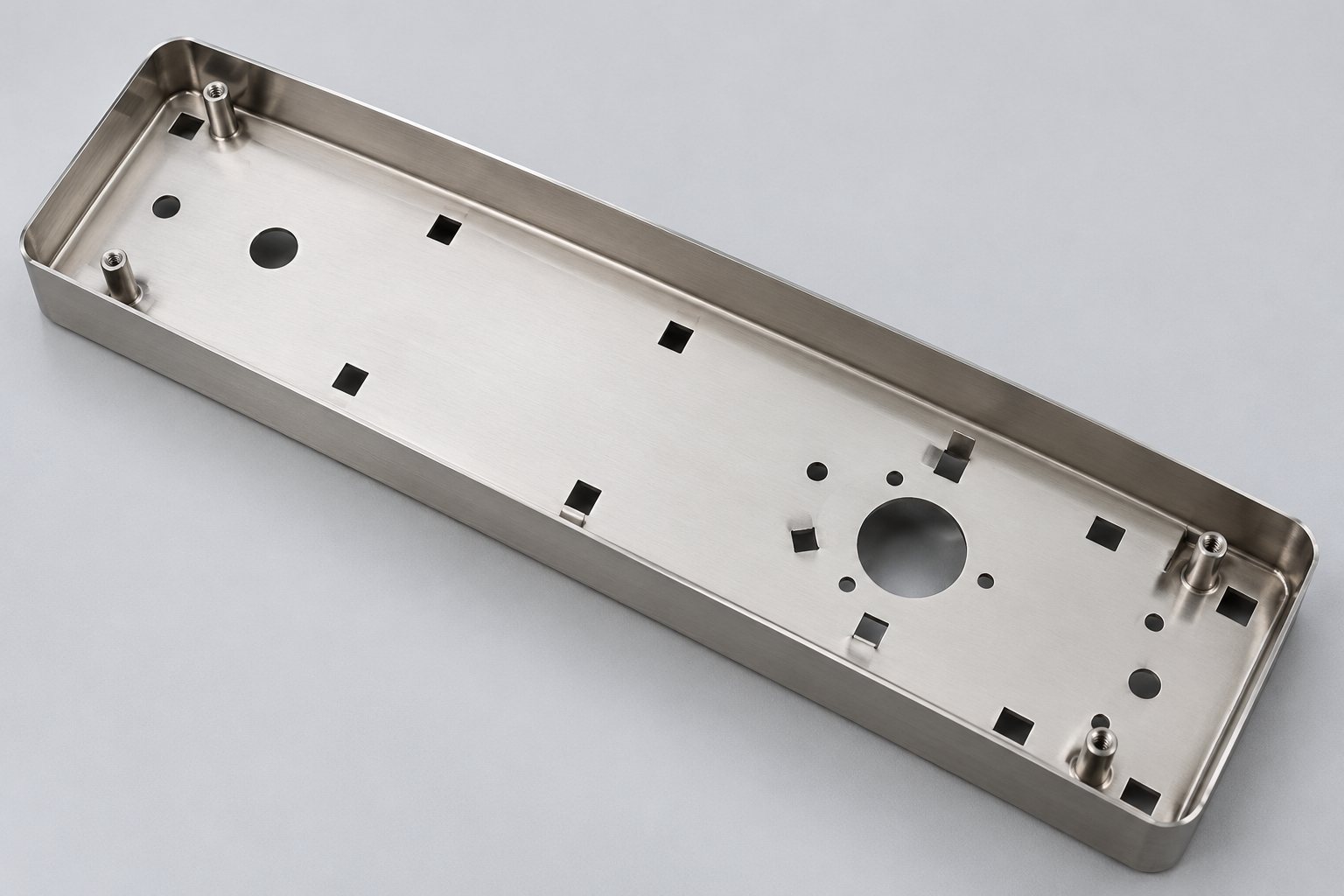
For a lock, SUS304 also matters for how it is made. It can be laser cut, stamped, formed and welded into a rigid housing, then brushed or polished to an even grain.
| Standard | Commonly corresponding grade |
|---|---|
| Japan (JIS) | SUS304 |
| United States (ASTM, AISI) | 304, UNS S30400 |
| Europe (EN) | 1.4301, X5CrNi18-10 |
| China (GB) | 06Cr19Ni10, S30408 |
Where We Use SUS304
| Door type | Models with SUS304 housing components |
|---|---|
| Aluminum profile doors | A1, A11, A6, R9 |
| Entrance and villa doors | A2, R1, R2, R8, double-sided models |
| Apartments | G2, G11 |
| Glass doors | A7, with aluminum-alloy components |
| Rooms, offices, American format | F2, M1; Z1 and M2 in their stainless steel versions |
| Gates | L1 front housing |
| Hotels and mechanical projects | J Series hardware; RA Series panels and handles |
Which Parts Are SUS304?
Which part of the lock?
Front and Rear Housings
The housings are the main SUS304 parts on most models.
- Material:SUS304 housing components on most models
- Exceptions:Iron housings on G1 and G3; iron versions of Z1, M2 and the L1 rear body, for lower-cost projects; aluminum-alloy components on A7
- Check:The model page lists the housing; the alloy check below confirms it on a sample
Lock Bodies and Strikes
The mortise is chosen for the door and is specified separately from the housing.
- Material:Mortise cases and faceplates in stainless steel versions, with iron or other materials for some functional parts
- Check:Name the lock body with the order; each mortise page lists the bodies for each model
- Note:A SUS304 housing says nothing about the lock body behind it
Electronics and Readers
Fingerprint readers, motors, circuit boards and communication modules come from qualified suppliers.
- Material:Chosen for their function, not SUS304
- Protection:Sealing and the IP rating protect them, not the housing grade
- Check:The model's IP rating and intended use
Finish Layer
Colored finishes sit on top of the housing, so the color does not tell you the material.
- Material:Athens black, red bronze, starry gray, titanium gold and black bronze are applied over the housing
- Check:Ask what is under the finish; a black A2 is SUS304, a black Z1 or M2 is iron
- Note:Have the test provider choose the measurement point and any surface preparation for the housing and its finish
Other components, such as seals, springs and screws, use materials selected for their function. Our article on which parts a SUS304 claim covers shows how to name them in an order.
How We Make the Housings
Our Jinhua factory cuts, stamps, forms, welds and machines the stainless steel housing parts, then polishes and cleans them before assembly. Polishing sets the grain and texture of the surface; cleaning removes polishing residue, which would otherwise mark or stain the steel. The factory page shows the lines and equipment.
Finishes on SUS304
Brushed stainless steel shows the material itself. Colored finishes such as Athens black, red bronze, starry gray, titanium gold and black bronze are applied over the SUS304 housing, so a black or bronze lock can still be stainless steel underneath. Finishes vary by model; see colors and finish options.
How to Check a SUS304 Sample
- Check the specification. It should name the parts that are SUS304, such as "SUS304 front and rear housings", not just "304 stainless lock".
- Don't rely on a magnet. SUS304 is largely non-magnetic, but forming and bending can make it slightly magnetic, so a magnet neither proves nor disproves the grade.
- Use alloy analysis. A handheld XRF analyzer measures the chromium and nickel content of the tested part; many inspection agencies offer it. Coatings, dirt and shape affect the reading, so the test provider chooses a suitable measurement point and any preparation. XRF cannot measure carbon, so it identifies the alloy family rather than confirming every limit of the standard.
- Look at the edges and joints. Cut edges, welds and screw holes should be clean, without discoloration or residue.
- Fit it on a real door. Check panel alignment, handle return and lock body movement; the material is only part of the quality.
Our SUS304 sample verification guide goes through each step, and our SUS304 sourcing guide follows the requirement through quotation and the purchase order.
Our SUS304 material test report. In a material test, a laboratory analyzes a sample of the steel, usually by optical emission or X-ray fluorescence spectrometry, and compares the measured chromium, nickel, carbon and other elements with the limits of the grade. Optical emission spectrometry also measures carbon, which a handheld XRF analyzer cannot. Our report comes from an independent laboratory and names the material sample tested; a copy is available on request for the relevant models covered by the report.
Frequently Asked Questions
Is every part of the lock made of SUS304?
No. SUS304 is used for the housings and visible structural parts. Electronics, internal mechanisms, seals and fasteners use materials suited to their function.
Can a SUS304 lock rust?
Yes, in some conditions. Salt deposits, chloride cleaners and dirt held against the surface can cause light brown staining, and under aggressive chloride exposure, local pitting. Coastal sites need a site assessment and regular cleaning; see corrosion resistance.
Is SUS304 enough for an outdoor lock?
The material is one part. An outdoor lock also needs the right IP rating, sealed electronics and fittings for the site. See outdoor durability.
Why is my stainless steel lock slightly magnetic?
Forming and bending change part of the SUS304 structure, which can make it slightly magnetic. It does not mean the grade is wrong; alloy analysis of the part is a better check.
Should a coastal lock be 316 instead of SUS304?
316 adds 2–3% molybdenum, which raises its resistance to chloride pitting. Our housings are SUS304, so for a coastal site first assess the salt exposure, how much moisture stays on the lock, its surface and how often it can realistically be cleaned, to decide whether SUS304 fits. Then set the cleaning plan; see corrosion resistance.
Request a SUS304 Sample
Send your door type, finish and quantity. We will suggest SUS304 models and prepare a sample you can check on your own door.