Corrosion Resistant Smart Locks
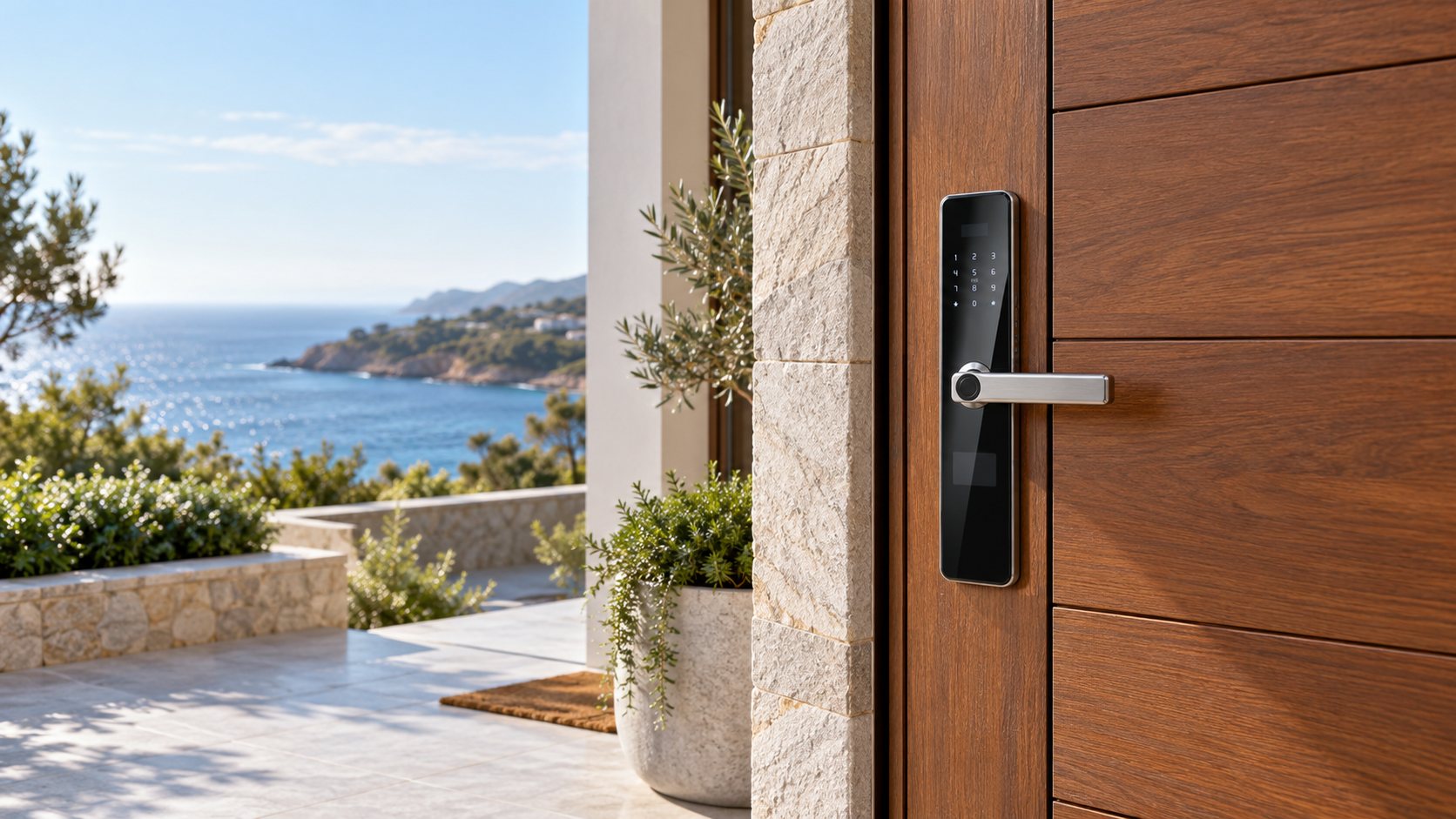
Choosing a corrosion resistant smart lock means checking five things together: the housing material, the finish, the parts around it (screws, lock body and strike), the site, and how the lock will be cleaned. For salt air and exposed doors, our starting point is a model with SUS304 housing components and an IP66 rating.
Our Locks for Corrosive Sites
These models combine SUS304 housing components with an IP66 rating: A2, A11, A6 and R9; the four double-sided models; the screenless R2; and L1 when it is ordered with the stainless steel rear body rather than the iron one. The waterproof smart locks page compares them. The screws, strike and lock body around the lock matter as much as the housing, so tell us the site when you order.
Where Corrosion Starts
Corrosion usually starts where water and salt stay, not where rain washes the surface. Watch these places:
- Sheltered surfaces. A rear housing or recessed face that rain never rinses collects salt and dust, which hold moisture against the metal.
- Joints and gaps. Screw heads, trim edges and the space behind a mounting plate stay wet longer than the open face.
- Surrounding parts. The lock body, strike, fasteners and gate post often see more water than the lock itself.
- Building work. Iron particles from cutting or grinding carbon steel nearby settle on stainless steel and rust on its surface.
- Cleaning products. Chlorine-based cleaners and abrasive pads damage the protective surface of stainless steel and many coatings.
SUS304, used for the housings of most of our models, protects itself with a chromium oxide film; SUS304 stainless steel smart locks explains how it works and where it reaches its limits.
What Is That Brown Mark?
Brown marks on stainless steel have three different causes, and each needs a different response.
What does the mark look like?
Rust Spots
Small orange or red spots, often scattered, appearing after building work nearby or contact with steel tools.
- Cause:Carbon steel particles from cutting, grinding or tools, rusting on the surface
- Effect:The stainless steel underneath is usually unaffected
- Action:Clean with the steps below; ask us before using any stronger product
- Prevent:Protect fitted locks during building work, and clean before handover
Tea Staining
A light brown film over the surface, strongest on sheltered areas that rain does not rinse; common within sight of the sea.
- Cause:Surface corrosion of the stainless steel itself, driven by salt deposits
- Effect:Mainly appearance, but a sign that salt is building up
- Action:Wipe with a lightly damp soft cloth and dry, including sheltered faces
- Prevent:Regular cleaning; smoother surfaces (0.5 µm Ra or finer) show less of it, according to the Australian Stainless Steel Development Association
Pitting
Marks that come back in the same spot after cleaning, or small pits you can feel, often where moisture stays.
- Cause:Chlorides breaking down the protective film in one spot
- Effect:Localized corrosion that can deepen if the cause stays, unlike the light surface film of tea staining
- Action:Photograph it with an overall view of the door, and send it to us
- Prevent:Review the site exposure, drainage and cleaning plan, and whether SUS304 fits the site
Assessing a Coastal or Exposed Site
Describe the site in these terms rather than "humid" or "outdoor":
| Site | What to record | What it affects |
|---|---|---|
| Interior room or corridor | Cleaning frequency and products | Finish choice and care instructions |
| Covered entrance | Rain direction, sheltered recesses | Rear housing, cleaning access |
| Open gate or courtyard | Rain, splash, runoff, receiving post | Model with IP66, fasteners, strike |
| Coastal or salt-exposed | Distance to the sea, wind, salt deposits, who cleans and how often | Site assessment before choosing the material and finish |
| Building site or retrofit | Cutting residue, old rust, surface damage | Cleaning before handover |
Send close-up photos of both sides of the door and one overall view showing the shelter and any water sources. For exposed doors, start with the waterproof IP66 models; IP66 keeps water out of the housing but says nothing about corrosion, so both checks are needed. Our guides to smart locks for coastal environments and materials for humid environments cover each site in more detail.
Salt Spray and Adhesion Tests
| Standard | What it tests | How to read the result |
|---|---|---|
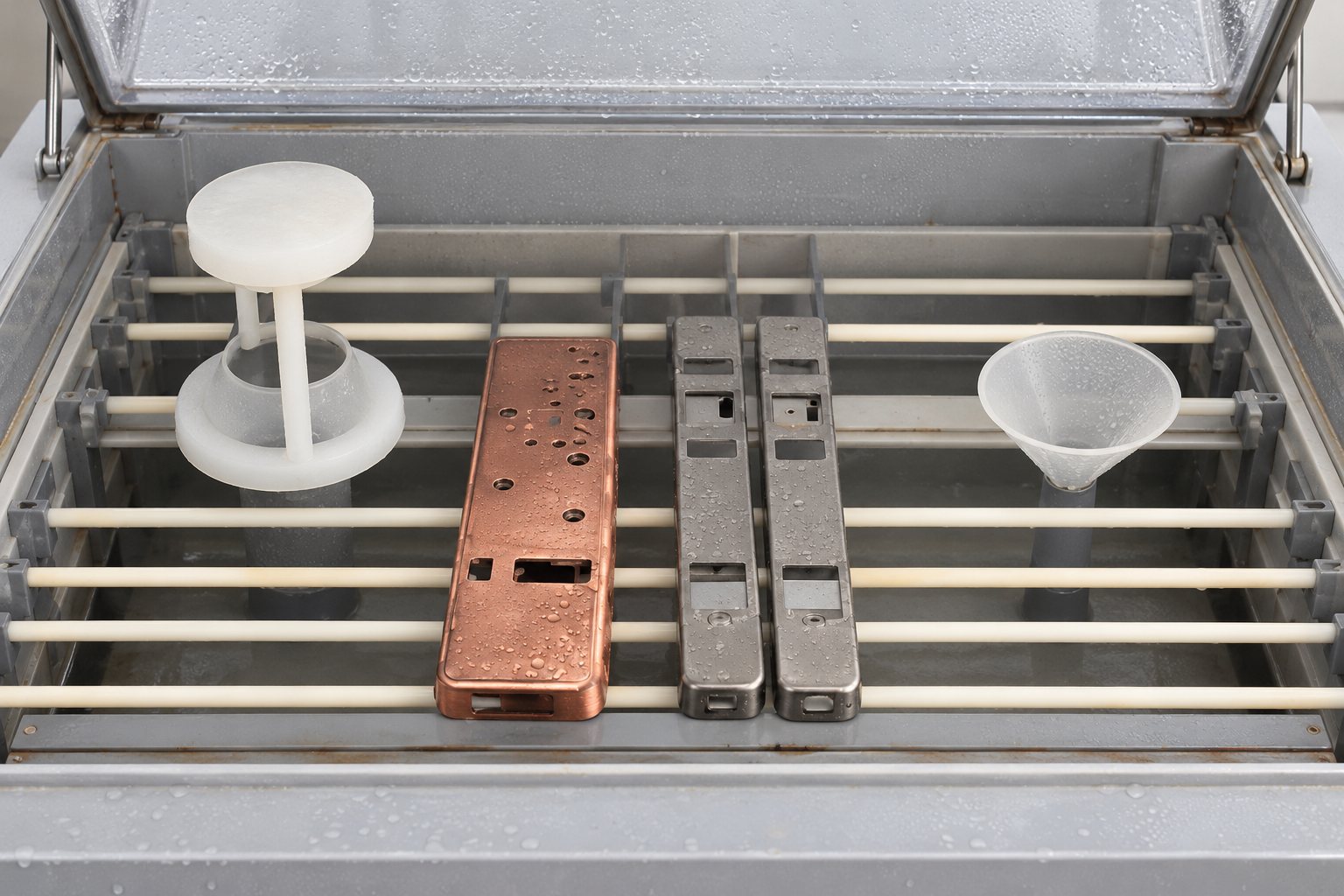
| ISO 9227 (NSS) | Neutral salt spray: samples sit in a fog of 5% sodium chloride solution at 35°C and pH 6.5–7.2. The acetic variant (AASS) runs at pH 3.1–3.3, and the copper-accelerated variant (CASS) adds copper chloride; both are used for decorative plated finishes | The report should name the sample, finish, hours and what counted as a failure, such as red rust or blistering |
| ASTM B117 | The American salt spray method, with the same 5% solution and 35°C cabinet | Read it like ISO 9227; results from the two are similar but not interchangeable |
| ISO 2409 | Coating adhesion by cross-cut: a lattice is cut through the coating and taped | Classified 0 to 5; 0 means no coating came off |
| ASTM D3359 | Coating adhesion by tape test: X-cut (Method A) for coatings over 125 µm, cross-cut (Method B) for thinner coatings | Method A is rated 5A to 0A, Method B 5B to 0B; 5 means no coating came off |
Salt spray hours do not convert into years at a real site: the test compares constructions and finishes under one fixed condition, and a result applies only to what was tested.
Our factory runs salt spray tests on representative samples, and we also hold a salt spray test report to ISO 9227. A report of this kind records the test method, the sample and its finish, the exposure hours and how the surface was rated afterwards, so it shows how that construction and finish held up under one fixed condition. A copy is available on request for the relevant models covered by the report. Our quality and testing page describes the lab, and the salt spray hours guide explains how to compare reports.
How to Clean a Smart Lock
- Wipe off loose dust with a soft, dry cloth. Keep grit away from the fingerprint reader and keypad.
- Clean with a soft cloth, lightly damp with water and a mild, neutral cleaner. On brushed stainless steel, wipe along the grain.
- Wipe again with a cloth dampened with clean water to remove the cleaner, then dry the surface.
- At coastal sites, repeat regularly, including the sheltered rear housing, the strike and the screw heads.
Never use steel wool, scouring powder, chlorine bleach or chloride cleaners, and never spray liquid directly at the lock: keep water out of joints and the reader. If a stain stays, photograph it and ask us before trying anything stronger.
Frequently Asked Questions
Can a stainless steel lock show rust?
Yes. Brown marks can be rust from iron particles on the surface, tea staining of the stainless steel near the sea, or local corrosion. The first two usually clean off; persistent or pitted marks should be photographed and reviewed.
How many salt spray hours do I need?
There is no fixed conversion from hours to years. Compare reports that use the same method, finish and failure criteria, and assess the actual site.
Do you have salt spray reports?
Yes. We hold a salt spray test report to ISO 9227, available on request for the relevant models covered by the report. Tell us the model, finish and target market, and we will match it.
Tell Us About Your Site
Send photos of the door or gate, the site conditions, the finish you want and the quantity. We will suggest the model and finish, and the care routine for the site.