SUS304 vs Zinc Alloy Smart Locks
In a SUS304 vs zinc alloy smart lock comparison, the short answer is this: stainless steel carries most of its corrosion resistance in the metal itself, while a zinc alloy lock relies largely on its plating or coating for appearance and for harsh sites. Zinc die casting makes complex shapes efficiently at volume; stainless steel housings are formed, welded and polished. Our housings are SUS304 stainless steel or, on selected lower-cost models, iron.
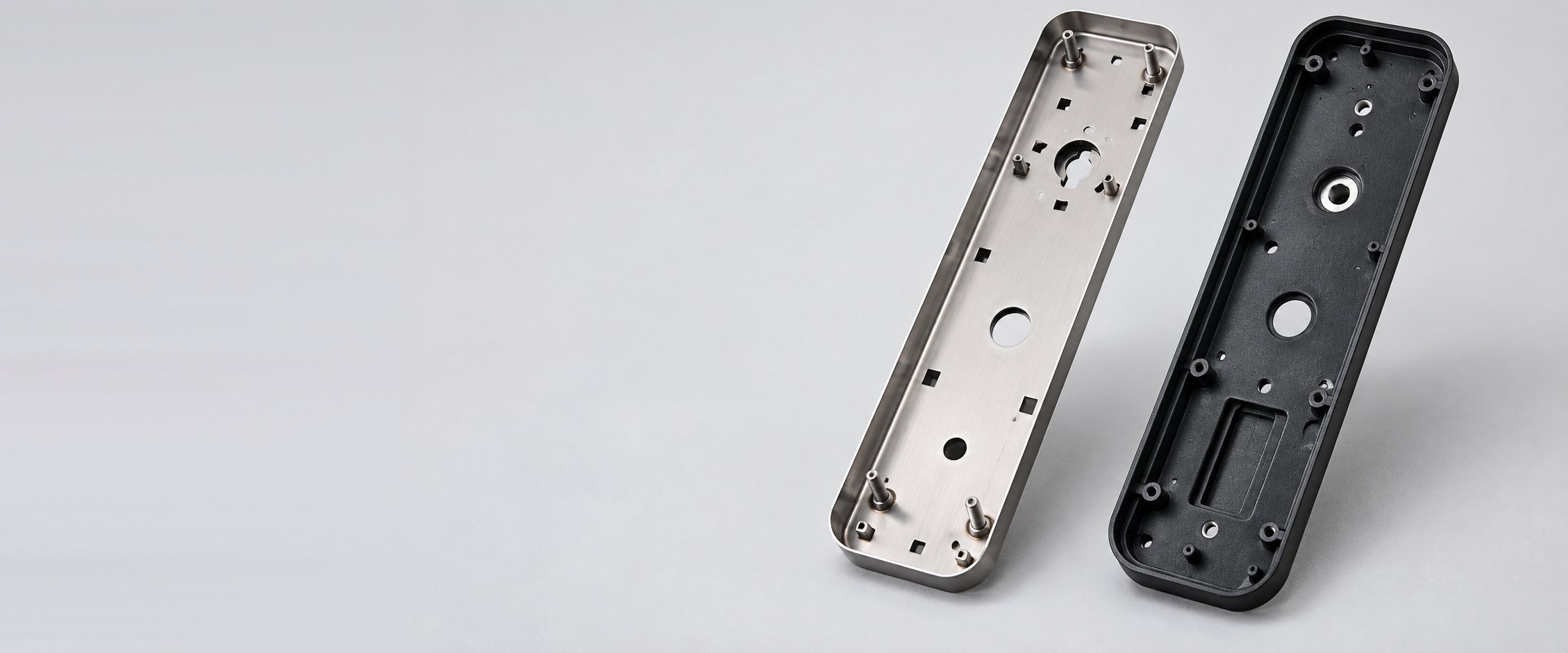
The Trade-Offs at a Glance
| Topic | SUS304 stainless steel | Zinc alloy |
|---|---|---|
| How the housing is made | Cut, stamped, formed, welded and machined from sheet | Die cast in a steel mold, then machined where needed |
| Corrosion | Protected by the steel's own chromium oxide film, which re-forms after a scratch | Bare zinc builds a slow-corroding surface layer, but it dulls and can form white corrosion products in damp conditions; plating or coating protects the appearance |
| Surface | Brushed or polished steel; colored finishes applied on top | Usually plated, painted or coated for lock hardware |
| Shapes | Best for flat and gently curved panels | Curves, recesses and fixing points in one part |
| Weight and feel | Sheet construction; feels cool and solid | Wall thickness set by the casting design; weight depends on design more than material |
| Tooling | Stamping and forming tools; welding and polishing add work to every part | A die-casting mold; once made, each casting needs less shaping work |
Corrosion: Material Versus Coating
The biggest practical difference is where the protection sits. On SUS304, it is mostly in the steel: under a scratch is still stainless steel, though the scratch stays visible and a colored finish can be damaged. Zinc alloy has its own protection too: in normal air it builds a compact surface layer that slows further attack. That layer dulls the surface, and where condensation stays for long periods it forms white corrosion products, so lock hardware is usually plated or coated, and the zinc industry recommends protective finishes for severe marine sites. The finish quality therefore matters more on zinc, and a chip or worn edge exposes the casting.
Neither is maintenance-free. Stainless steel can stain at coastal sites or under deposits, and a well-plated zinc lock can do well indoors. For exposed doors, ask for test records that name the method, the tested finish and the hours; corrosion resistance explains how to read them.
Weight, Feel and Strength
A heavier lock is not automatically stronger. Zinc die-casting alloy (Zamak 3) weighs about 6.7 g/cm³, against about 7.9 g/cm³ for 304 stainless steel, yet a zinc lock can still weigh more than a formed stainless one, depending on its wall thickness and design. Weight alone says nothing about quality. Strength depends on the housing design, how the handle is supported, the lock body and the fixings. Compare those on the sample: panel alignment, handle return and how the lock body moves.
Finish Options
Zinc castings take plating and coatings in almost any color, including bright chrome and gold. Stainless steel shows its own brushed or polished surface, and takes colored finishes such as Athens black, red bronze or titanium gold on top. Similar colors can come from very different materials, so ask what is under the finish. Our finishes by model are on colors and finish options.
Tooling and Unit Cost
Both materials need tooling for a new shape: a mold for die casting, stamping and forming tools for stainless steel. Which costs more depends on the part's design, not the material alone. What differs is how cost spreads: a die-cast part needs little shaping once the mold exists, so its tooling is spread over the volume, while a formed stainless part also carries welding and polishing work on every unit. A design change can mean modifying either set of tools. For a private-label design change, ask the quote to separate the tooling charge from the unit price, and compare both at your expected volume; see tooling costs, NRE and MOQ.
Compare unit prices only between equal packages: same functions, app version, lock body, keys, batteries or lithium pack, accessories, finish and packaging. Installation and service costs count too; see unit price vs installed project cost.
Before You Decide
- A material grade is not a quality grade. A well-made zinc alloy lock beats a badly made stainless one.
- "Stainless steel" may describe only the front panel. Ask which parts are SUS304; see which parts a SUS304 claim covers and how to check a SUS304 sample.
- The door decides first. Choose the lock format that fits the door and site, then compare materials within it.
Frequently Asked Questions
Is SUS304 better than zinc alloy for a smart lock?
For corrosion, usually yes, because most of the protection is in the steel rather than in a coating. For complex shapes at low unit cost, zinc die casting has the advantage. The design and build quality of the whole lock matter more than either material.
Is zinc alloy always cheaper?
Not always. Tooling, finishing and volume all change the answer. Compare the tooling charge and unit price separately, at your expected volume, for packages with the same functions and accessories.
Does a heavier lock mean better quality?
No. Weight depends on the wall thickness and design, so it says little about strength. Check the handle support, lock body and fixings instead.
Can a black lock be stainless steel?
Yes. Black, bronze and gold are finishes. A black lock can be SUS304, iron or zinc alloy underneath; on our range, finish options shows which material sits under each color.
What are SivoLock housings made of?
Our housings are SUS304 stainless steel (with aluminum-alloy components on the A7 glass door lock) or, on selected lower-cost models, iron. See the housing material by model.
Compare Your Current Lock With Ours
Send the lock you use today or a competitor's model, the door type, the functions you need and the quantity. We will suggest the SivoLock model to compare and send a sample.